A Practical Guide to Radiator & Towel Rail Sizing and Placement
- Inspired Heating
- News
- 1 Apr 2026
-
52views
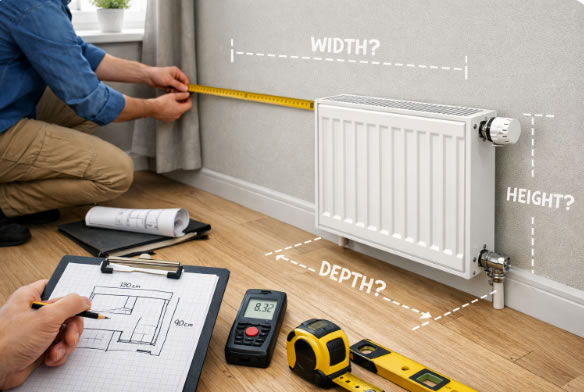
Getting radiator and towel rail sizing and placement right is one of the biggest factors in how warm, comfortable, and efficient a home feels. Too small and rooms never heat up properly; too big or badly placed and you waste energy, money, and wall space. This guide breaks it down step by step.
1. How to Size Radiators Correctly
Radiator sizing is measured in heat output, usually shown as BTUs or watts. The goal is to match the radiator’s output to the room’s heat demand.
Step 1: Measure the Room
You’ll need:
-
Room length × width × height
-
Type of room (bedroom, bathroom, living space)
-
Insulation level (modern vs older property)
As a rough rule of thumb:
-
Well-insulated rooms: ~100 watts per m²
-
Average insulation: ~110–130 watts per m²
-
Poor insulation / older homes: ~140–150 watts per m²
Bathrooms typically need higher output due to tiles and ventilation.
Step 2: Factor in Heat Loss
Increase required output if the room has:
-
Large windows or patio doors
-
External walls (especially more than one)
-
High ceilings
-
North-facing exposure
Step 3: Choose the Radiator Size
If in doubt, slightly oversize rather than undersize. An oversized radiator can run at a lower temperature efficiently; an undersized one will always struggle.
2. Radiator Placement: What Works Best
Correct placement helps distribute heat evenly and reduces cold spots.
Best Locations for Radiators
-
Under windows (traditional and effective)
-
On external walls where heat loss is greatest
-
Central to the room where possible
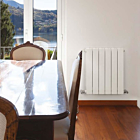
Radiators under windows counteract cold air entering through the glass, helping maintain an even room temperature.
What to Avoid
-
Behind large furniture (sofas, wardrobes, cabinets)
-
Tucked into tight alcoves with no airflow
-
Covered by thick curtains
-
Directly behind doors that stay open
Good airflow around the radiator is essential for proper heat circulation.
Mounting Heights (General Guide)
-
From floor: 100–150mm
-
From windowsill: At least 75–100mm
-
From wall (depth clearance): As recommended by manufacturer.
3. Sizing Towel Rails Correctly
Towel rails are often undersized because people prioritise looks over output.
Bathroom Heat Requirements
Bathrooms need more heat than other rooms:
-
Tiles absorb heat
-
Ventilation removes warmth
-
Wet towels cool the space
As a rule:
-
Small bathroom: 700–1000 BTU
-
Medium bathroom: 1200–1800 BTU
-
Large bathroom: 2000+ BTU
If the towel rail is the only heat source, aim higher.
Heated Towels vs Room Heating
Remember:
-
Hanging towels reduces heat output
-
A towel rail rated at 1200 BTU may deliver much less once towels are on it
In larger bathrooms, consider:
-
A towel rail plus a separate radiator
-
Or a high-output designer towel rail
4. Towel Rail Placement Tips
Ideal Locations
-
Close to showers or baths (easy towel access)
-
On external walls where heat loss occurs
-
Away from direct drafts
Avoid These Mistakes
-
Placing behind doors
-
Mounting too high to reach comfortably
-
Installing where towels block airflow entirely
Height Guide
-
Bottom of towel rail: at least 150mm from floor
-
Allow space above for towel hanging
-
Consider who’s using it (children vs adults)
5. Valves, Controls & Final Details
-
Use thermostatic radiator valves (TRVs) to control room temperature
-
In bathrooms, ensure valves are suitable for humid environments
-
Electric towel rails are great for summer use when central heating is off
-
Always check manufacturer BTU ratings at your system temperature
6. Common Mistakes to Avoid
-
Guessing radiator size based on looks alone
-
Undersizing towel rails
-
Blocking radiators with furniture
-
Ignoring insulation and heat loss
-
Forgetting towel rails lose output when towels are added
-
Final Takeaway
Correct radiator and towel rail sizing isn’t complicated—but it does require planning. Measure the room, understand heat loss, place radiators where airflow is good, and never underestimate bathroom heating needs. Done right, your system will be more comfortable, efficient, and cheaper to run.